Home Education Hub
Home Ed at the Ark — practical, animal-led learning at the sanctuary, with a private learning log your family can keep, add to and download.
Meet Tia
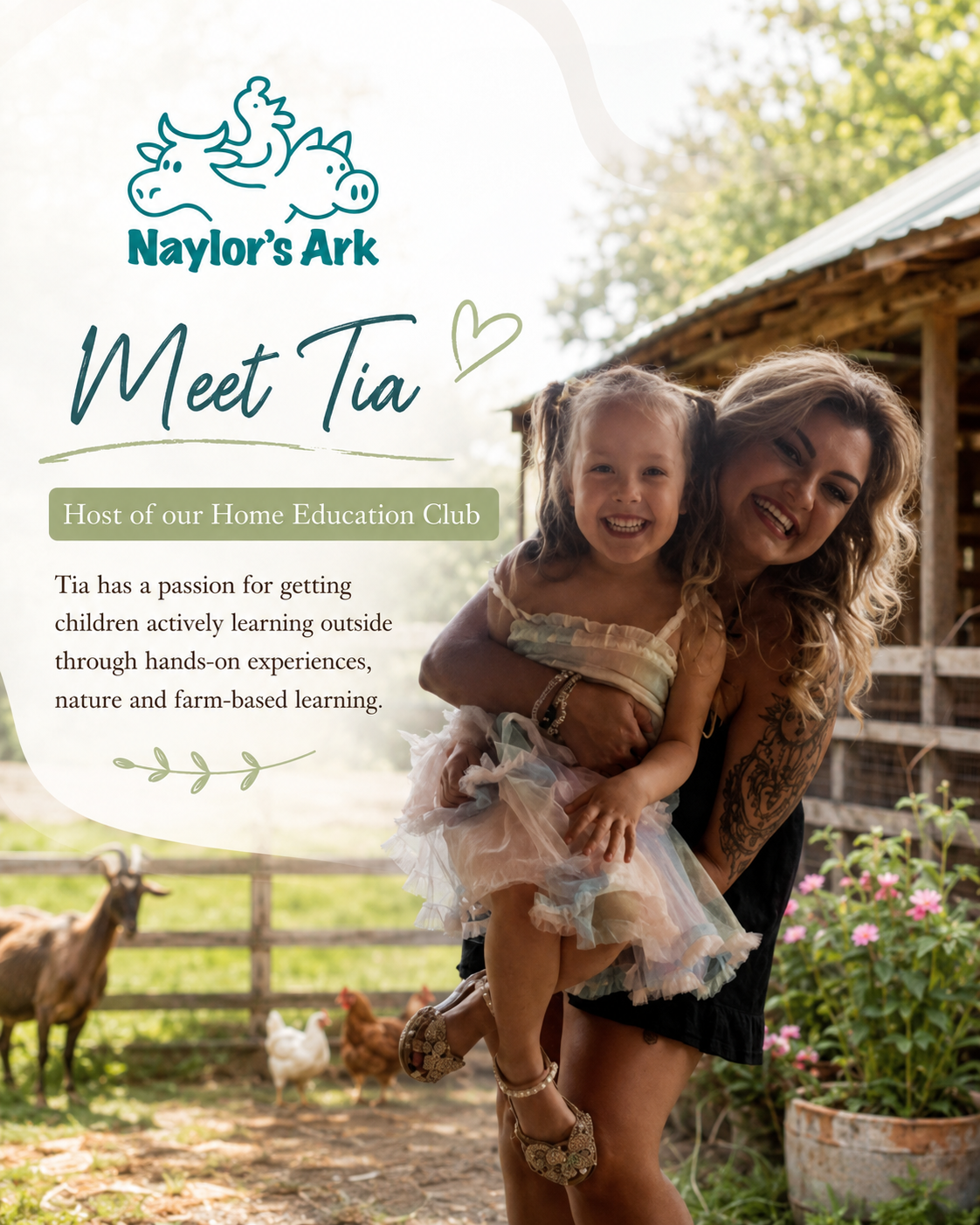
Tia has a passion for getting children actively learning outside through hands-on experiences, nature and farm-based learning.
She leads every hub session at the Ark — settling new families in, matching activities to each learner, and making sure the animals and the children both have a good day.
Harvest & Farm Skills
A five-week September term built around our animals and a gentle look at the orchard — gathering a little windfall fruit, pressing, composting, farm maths and autumn nature study. We only ever gather small amounts, with permission, and leave plenty for wildlife.
- Wed 2 SeptemberWelcome to the Farm
Animal welfare, daily care routines and farm safety. Meet each animal group, pick the resident you'll follow all month, and start your own farm journal.
Meet every animal groupFarm safety and handwashingStart your farm journal - Wed 9 SeptemberOrchard Harvest Day
Gather a single basket of windfall and ripe fruit with permission, weigh and sort it, then wash, chop and press just enough for everyone to taste — hygiene, food preparation and where our food really comes from. The trees and the rest of the crop stay exactly as they are.
Gather one basket, with permissionWeigh and tally what we pickedPress a taste of apple juice - Wed 16 SeptemberFrom Apple to Animal
Follow the leftovers. Compost the pulp, discover which animals can safely eat which fruit, and run an apple taste-test with a proper results chart.
Compost heap digApple taste-test and chartSafe treats and balanced diets - Wed 23 SeptemberJunior Farm Managers
Real-life farm maths with feed, hay, fencing, water and orchard produce — then budget a batch of apple juice from fruit weight to bottle price.
Measure, weigh, estimateCost up a juice runPitch your farm plan - Wed 30 SeptemberAutumn Nature Detectives
Scavenger hunt through the orchard for leaves, seeds, fungi, insects and shifting animal behaviour, finishing with natural crafts to take home.
Autumn scavenger huntTree identificationLeaf prints and natural crafts
Pumpkins, Lasers & Lanterns
A Halloween-themed October term. Children carve pumpkins and feed the insides to the animals who can safely eat them, get the farm ready for winter, and draw their own Halloween decorations which we cut and engrave on our Lightburn laser machine to take home.
- Wed 7 OctoberLightburn Halloween Decorations
Draw a Halloween design, measure and scale it to a wooden blank, then watch it engraved on our Lightburn laser machine and take the finished decoration home.
Your drawing, laser engravedLaser safety and measuringDecoration to take home - Wed 14 OctoberGetting the Farm Ready for Winter
Deep bedding, shelter checks, rugs, winter rations and water — practical animal care as the nights draw in, plus a shelter built for hedgehogs and insects.
Deep bedding and shelter checksWinter feed and waterBuild a wildlife shelter - Wed 21 OctoberPumpkin Carving & Animal Feast
Held close to Halloween so the pumpkins stay fresh for the 31st: scoop, weigh and carve, then serve the seeds and flesh to the residents who can safely enjoy them — with a look at which animals must not have any.
Carve your own pumpkinFeed the insides to the animalsSave seeds for spring - Wed 28 OctoberHalloween Farm Party
A calm costume day with an autumn trail, spooky-but-kind facts about bats, owls and spiders, and a display of every decoration made this month.
Halloween farm trailSpooky-but-kind animal factsDecoration display
Firelight, Fleece & Winter Wildlife
A calm, cosy November term. Children learn how we settle the animals through fireworks season, mark Remembrance with the story of animals in wartime, work our own fleece from wash to felt, and feed the wild visitors who rely on the farm in winter — finishing with handmade, laser-engraved gifts.
- Wed 4 NovemberFireworks, Bonfires & Keeping Animals Calm
Practical animal welfare for the loudest week of the year — deep bedding, quiet corners, hedgehog checks and a care plan for your chosen resident.
Firework-night care planCheck bonfires for hedgehogsCalm handling in noisy weather - Wed 11 NovemberRemembrance, Poppies & Farm History
Animals in wartime, a short calm silence at the paddock, a poppy patch sown for spring and a felt poppy made from our own wool.
Animals in wartimeSow a poppy patchMake a wool poppy - Wed 18 NovemberWool, Warmth & Winter Crafts
Wash, card and felt our own fleece, then run a proper warmth experiment to find out what really keeps heat in.
Fleece to feltWarmth experiment and chartsWinter coat and condition checks - Wed 25 NovemberWinter Wildlife & Handmade Gifts
Feeders, tracks and winter visitors, plus a child-drawn design engraved on the Lightburn machine as a handmade gift to take home.
Build and hang a bird feederTrack winter visitorsLaser-engraved handmade gift
Winter Care & Christmas on the Farm
A short, warm December term of three Wednesdays, breaking up the week before Christmas. Children take on the hardest winter jobs on the farm, make laser-engraved gifts and decorations, and finish with a festive end-of-term celebration and a display of everything made this autumn.
- Wed 2 DecemberWinter Animal Care & Shelter Watch
Frozen troughs, deep bedding, winter rations and body-condition checks — the real work of keeping animals well in hard weather.
Ice-breaking and water checksWinter rations and beddingShelter and health checks - Wed 9 DecemberFestive Lightburn Workshop
Draw, measure and scale a festive design, then watch it engraved on our Lightburn laser machine and take home a handmade gift set.
Your drawing, laser engravedMeasuring and scalingGift and tag to take home - Wed 16 DecemberChristmas on the Farm — End of Term
The last session before Christmas: safe festive enrichment for the animals, a winter trail, quiet carols at the paddock and a display of the whole term's work.
Festive animal enrichmentWinter farm trailEnd-of-term display
Home Ed at the Ark — bookable dates
Wednesdays, 11am–2pm. Places are per child from £15 a session (siblings from £25 for two), or book a whole month as a block and save 20%. One supervising adult per booking is included; extra adults or carers need a paid place.
Loading session dates…
Booking is open to registered Home Ed families once their registration is approved — it only takes a moment to register.
September Home Ed pricing
One supervising adult per booking is included; extra adults or carers need a paid place. Block booking covers all five September Wednesdays — saving on the per-session price.
Book September, October, November and December together and take 30% off the combined block price.
Each child’s place includes one supervising adult; any additional adults or carers need their own paid place. Free carer places are only offered on Forget Me Not Friday and Silent Connections. To book, contact the sanctuary team or reserve through the farm sessions page.
Activities you can log
Each activity comes with things to complete during the session and fun ideas to carry on at home afterwards.
Join the daily checks — feeding, watering, mucking out and noticing how each animal is doing.
During the session
- Help fill and carry water buckets safely
- Weigh or measure one feed ration
- Record how many animals were checked and any changes noticed
- Wash hands properly at the station and explain why
Fun things to do at home after
- Draw a daily care timetable for a farm animal of your choice
- Write a short 'day in the life' diary entry as one of the animals
Quiet observation of body language — happy behaviours versus signs an animal is uncomfortable.
During the session
- Watch one animal for five minutes without interrupting it
- Tally three behaviours you see
- Name one relaxed sign and one uncomfortable sign
Fun things to do at home after
- Repeat the five-minute watch with a pet, bird or squirrel at home
- Make a poster of 'happy' and 'please give me space' signals
Meet the rescue flock and explore fleece — from the animal to a usable material.
During the session
- Handle a fleece sample and describe its texture in three words
- Compare fleece with a synthetic fabric
- Sketch a sheep and label four body parts
Fun things to do at home after
- Try finger-weaving or pom-pom making with wool
- Find three woollen items at home and read their labels
Collect, count and record eggs, and learn how the birds are kept healthy.
During the session
- Collect and count today's eggs
- Record the count on the sanctuary tally
- Check feeders and water and top up with supervision
Fun things to do at home after
- Plot a week of egg counts on a bar chart
- Cook something using eggs and write the method out
Walk the paddock edges to identify plants, minibeasts and the habitats they need.
During the session
- Identify three plants using the field guide
- Find one minibeast habitat and describe it
- Collect a safe natural object to talk about
Fun things to do at home after
- Build a bug hotel or bird feeder for your garden or balcony
- Keep a two-week nature-spotting list
Safe approach, grooming and leading with the larger residents under supervision.
During the session
- Show a safe approach and stop distance
- Groom under supervision and name each brush used
- Explain one safety rule to another learner
Fun things to do at home after
- Research where alpacas come from and what they are farmed for
- Design a safety poster for new visitors
How medicines, withdrawal periods and health records keep animals and people safe.
During the session
- Look at a (blank) medicine record and name each column
- Work out a withdrawal end date from a treatment date
- Explain why records must be kept for years
Fun things to do at home after
- Write up what a farm vet does as a job profile
- Design your own record sheet for a pet's health
Hear how residents arrived and turn it into writing, speaking or artwork.
During the session
- Choose one animal and gather five facts about its rescue
- Ask the team two questions of your own
- Sketch or photograph your chosen animal
Fun things to do at home after
- Write a newspaper report or picture book page about the rescue
- Record a one-minute talk about why sanctuaries matter
Meet the animal groups, learn the daily care routines and farm safety rules, and start your own farm journal.
During the session
- Walk the site map and name each animal group and where they live
- Learn the five farm safety rules and the handwashing routine
- Shadow one daily care job — feed, water or bedding
- Decorate and start your farm journal with a first entry
- Choose an animal to follow through the whole month
Fun things to do at home after
- Add a page to your journal about your chosen animal
- Design a farm safety poster for the family fridge
- Draw a map of the sanctuary from memory
Gather a small basket of windfall and ripe fruit with the landowner's permission, weigh and sort it, then wash, chop and press just enough for a taste of fresh juice.
During the session
- Check which trees we have permission to gather from, and leave the rest untouched
- Learn to tell sound fruit from windfall that should be left for wildlife or composted
- Fill one small basket between the group — we only take what we will use that day
- Weigh and count what we gathered and record it on the orchard tally
- Scrub hands and equipment, then wash and chop the fruit
- Take a turn on the apple press and taste the juice you made
- Talk through how orchards change across the four seasons and why we leave fruit for birds and insects
Fun things to do at home after
- Bake or cook something with apples at home and write out the method
- Design a label for a bottle of Ark apple juice
- Count the apples in your fruit bowl each day for a week and graph it
Where leftover fruit and pulp goes — composting, food waste, and which animals can safely eat what.
During the session
- Sort leftover pulp into compost, animal-safe feed and no-go piles
- Learn which residents can eat apple and which absolutely cannot
- Taste-test three apple varieties and score them for sweetness and crunch
- Turn the class scores into a simple results chart
- Help build or turn the compost heap and find its minibeasts
- Explain why treats must stay small — laminitis and balanced diets
Fun things to do at home after
- Start a kitchen scraps compost tub or wormery at home
- Track your household food waste for three days
- Write a 'safe treats' guide for a pet or farm animal
Real farm maths — feed, hay, fencing, water and orchard produce, plus costing up a batch of juice.
During the session
- Weigh out a real feed ration and check it against the chart
- Estimate then measure a run of fencing and compare your guess
- Work out how much water the herd drinks in a day
- Calculate how many bottles of juice a given weight of apples makes
- Price up bottles, labels and lids and set a fair selling price
- Present your farm plan to the group in one minute
Fun things to do at home after
- Plan a pretend farm shop stall with prices and a profit target
- Convert your feed maths into kilograms, grams and pounds
- Design packaging for the Ark juice using recycled materials
Hunt the orchard and paddocks for signs of autumn — leaves, seeds, fungi, insects and changing animal behaviour.
During the session
- Complete the autumn scavenger hunt across the orchard
- Identify three trees from their leaves, bark and fruit
- Look (never touch) for fungi and record where they grow
- Note two ways the animals' behaviour has changed with the season
- Make a leaf print, bark rubbing or natural collage to take home
- Check how much earlier the light is fading than in summer
Fun things to do at home after
- Press your leaves and build an autumn identification book
- Keep a two-week daylight and weather diary
- Build a hedgehog or insect shelter ready for winter
Scoop, carve and design a pumpkin, then feed the seeds and flesh to the animals who can safely enjoy them.
During the session
- Weigh your pumpkin before and after scooping and work out the difference
- Sort the insides into seeds, flesh and stringy bits
- Learn which residents can safely eat pumpkin and which cannot
- Feed the prepared pumpkin to the animals under supervision
- Carve or draw your design with supervised tools
- Save and dry a handful of seeds for planting
Fun things to do at home after
- Roast your saved seeds and write the recipe out
- Plant a pumpkin seed in spring and keep a growth diary
- Draw the life cycle of a pumpkin from seed to compost
Draw your own Halloween design, then watch it become a real wooden decoration on our Lightburn laser machine.
During the session
- Sketch a Halloween or autumn design in bold, simple lines
- Measure your wood blank and scale the drawing to fit
- Watch your drawing scanned and prepared for the laser
- Follow the laser safety rules — goggles, distance and extraction
- See your design burned and sand the edges smooth
- Talk about how a laser turns light into heat
Fun things to do at home after
- Paint or varnish your decoration and hang it at home
- Design a second decoration on paper ready for next time
- Find three things at home made by a machine and three made by hand
Bedding, coats, shelter checks and extra feed — how animal care changes as the nights draw in.
During the session
- Help lay deep bedding in a shelter and explain why it keeps animals warm
- Check shelters for draughts, leaks and safe footing
- Compare summer and winter feed rations for one animal
- Fit or check a rug on a pony under supervision
- Break the ice test — why water buckets must be checked twice a day
- Build or refresh a hedgehog and insect shelter for winter
Fun things to do at home after
- Make a winter bird feeder and record who visits
- Write a winter care plan for a pet or farm animal
- Keep a temperature chart for one week
Costumes, an autumn trail, spooky-but-kind animal facts and a display of everything made this month.
During the session
- Complete the Halloween farm trail and collect every clue
- Learn three true facts about bats, owls, spiders or rats and why they matter
- Hang your Lightburn decoration on the display
- Tell the group one thing you learned this month
- Help with a calm, quiet costume parade — no masks near the animals
- Pack away, tidy the site and do the final handwash
Fun things to do at home after
- Write a spooky-but-kind story starring a farm animal
- Make a bat or owl mask from recycled card
- Add your favourite October photo and caption to your farm journal
How loud nights affect farm animals and wildlife, and the practical things we do to keep every resident settled.
During the session
- Watch and record how animals respond to sudden sound
- Help prepare extra deep bedding and a quiet shelter corner
- Make a firework-night care plan for one chosen resident
- Check a bonfire site for hedgehogs and explain why we always do
- Design a polite "please warn us" note for neighbours
- Learn the calm-body rules — slow moves, low voices, no running
Fun things to do at home after
- Write a firework safety leaflet for pet owners
- Build a hedgehog house from a crate and dry leaves
- Keep a noise diary over bonfire week and note how pets react
Animals in wartime, why we wear poppies, and how a working farm fed a country — history you can hold.
During the session
- Hear the stories of horses, pigeons and dogs in wartime
- Take part in a short, calm two-minute silence at the paddock
- Plant or sow a poppy patch ready for spring
- Compare a wartime farm ration with today's animal feed
- Make a felt or pressed-flower poppy from farm wool
- Write one sentence of thanks for the memory board
Fun things to do at home after
- Interview an older relative about food and rationing
- Draw a wartime farm scene and label the jobs children did
- Grow your poppy seeds in a pot and record germination
From fleece to fabric — washing, carding and felting our own wool, and testing what really keeps a body warm.
During the session
- Wash, card and tease a handful of our own fleece
- Wet-felt a small decoration or ball to take home
- Test three materials to see which holds heat longest
- Measure and record water temperature every two minutes
- Explain how lanolin and crimp keep a sheep dry and warm
- Check the flock's winter coats and body condition with a volunteer
Fun things to do at home after
- Repeat the warmth test at home with a hat, foil and a towel
- Finger-knit a length of wool and measure it
- Find three woollen items at home and read their care labels
Feed the wild visitors, track who calls in over winter, and make laser-engraved gifts and bird treats to take home.
During the session
- Identify winter birds and mammals from prints, feathers and photos
- Make and hang a seed feeder, then record who visits
- Draw a winter design to engrave on the Lightburn laser machine
- Weigh and cost the ingredients for a batch of bird cakes
- Refresh a hedgehog or insect shelter for the cold months
- Wrap your gift with reusable or recycled materials
Fun things to do at home after
- Run a 30-minute garden bird count and tally the species
- Keep the feeder topped up and chart visitors for two weeks
- Make a second handmade gift and write the card yourself
The coldest jobs on the farm — frozen water, deep bedding, extra rations and daily health checks in hard weather.
During the session
- Break and refill ice-topped water troughs and record the temperature
- Lay deep bedding and explain how it traps warmth
- Weigh out a winter ration and compare it with a summer one
- Body-condition score one animal with a volunteer
- Check every shelter for draughts, leaks and safe footing
- Spot and report three signs an animal may be too cold
Fun things to do at home after
- Keep a frost and temperature chart for two weeks
- Write a cold-weather checklist for a pet or local wildlife
- Insulate a water bottle three ways and test which works best
Draw your own decoration or gift tag and watch it engraved on our Lightburn laser machine to take home.
During the session
- Sketch a festive or animal design in bold, simple lines
- Measure your wood blank and scale the drawing to fit
- Follow the laser safety rules — goggles, distance and extraction
- Watch your design engraved and sand the edges smooth
- Make a matching gift tag for someone at home
- Cost up your gift set from blank to finished piece
Fun things to do at home after
- Paint or varnish your decoration and hang it up
- Design next year's decoration on paper
- Wrap your gift using only reused or recycled materials
Our last session before Christmas: festive animal enrichment, a winter trail, carols at the paddock and a display of the whole term's work.
During the session
- Make a safe festive enrichment treat and check which animals may have it
- Complete the winter farm trail and collect every clue
- Hang your Lightburn decoration on the end-of-term display
- Sing or sign a quiet carol at the paddock — calm voices near the animals
- Share one thing you are proudest of from this term
- Help pack away, tidy the site and do the final handwash
Fun things to do at home after
- Write a thank-you card to your favourite resident
- Make a bird-friendly festive garland for the garden
- Read back your farm journal and choose your top three adventures
Every session: safety, welfare and hygiene checklist
The same checklist runs at every hub session. Families work through it with their learners and confirm it in the learning log, so welfare and food-preparation steps are evidenced each time.
- Signed in at the gate and listened to the site safety briefing
- Suitable footwear and clothing for a working farm, long hair tied back
- Know where the toilets, handwashing station, first aid kit and fire point are
- Gates and latches: closed behind us every single time
- Learners stay with their adult and never enter a paddock unsupervised
- Approach calmly and quietly — no running, shouting or chasing
- Only touch or feed animals when a member of the team says it is safe
- Nothing fed from home; only feed provided by the sanctuary and to the correct ration
- Ponies: no treats at all (laminitis) — hands flat, fingers tucked
- Give animals space to walk away, and report anything that looks wrong to the team
- Hands washed with soap and warm water after animal contact and before eating
- No eating, drinking, thumb-sucking or phone use in animal areas
- Cuts and grazes covered before handling animals or produce
- Boots brushed and dipped where signed, before and after the visit
- Only picked fruit identified as safe by the team — nothing off the ground unless approved
- Fruit washed thoroughly, and hands rewashed before any food handling
- Clean boards, presses, bottles and cloths used, and equipment cleaned after use
- Knives and tools used seated, supervised and away from other learners
- Allergies and dietary needs checked before any tasting activity
- Fresh juice consumed the same day or chilled — not stored on site
- Tools, buckets and equipment returned and the area tidied
- Final handwash before leaving the farm
- Any incident, near miss or animal concern reported to the team
How to join
- Create a supporter account (or sign in to the one you already have).
- Register your family for the Home Education Hub — names and ages of your learners, and what you hope to get from the farm.
- We review each registration by hand and confirm your place. Only registered families see the hub.
- Book your sessions, then log each visit and download your report whenever you need it.